business
Manual quoting slows your pipeline
Spreadsheet-based quoting often delays response time and creates hidden risk.
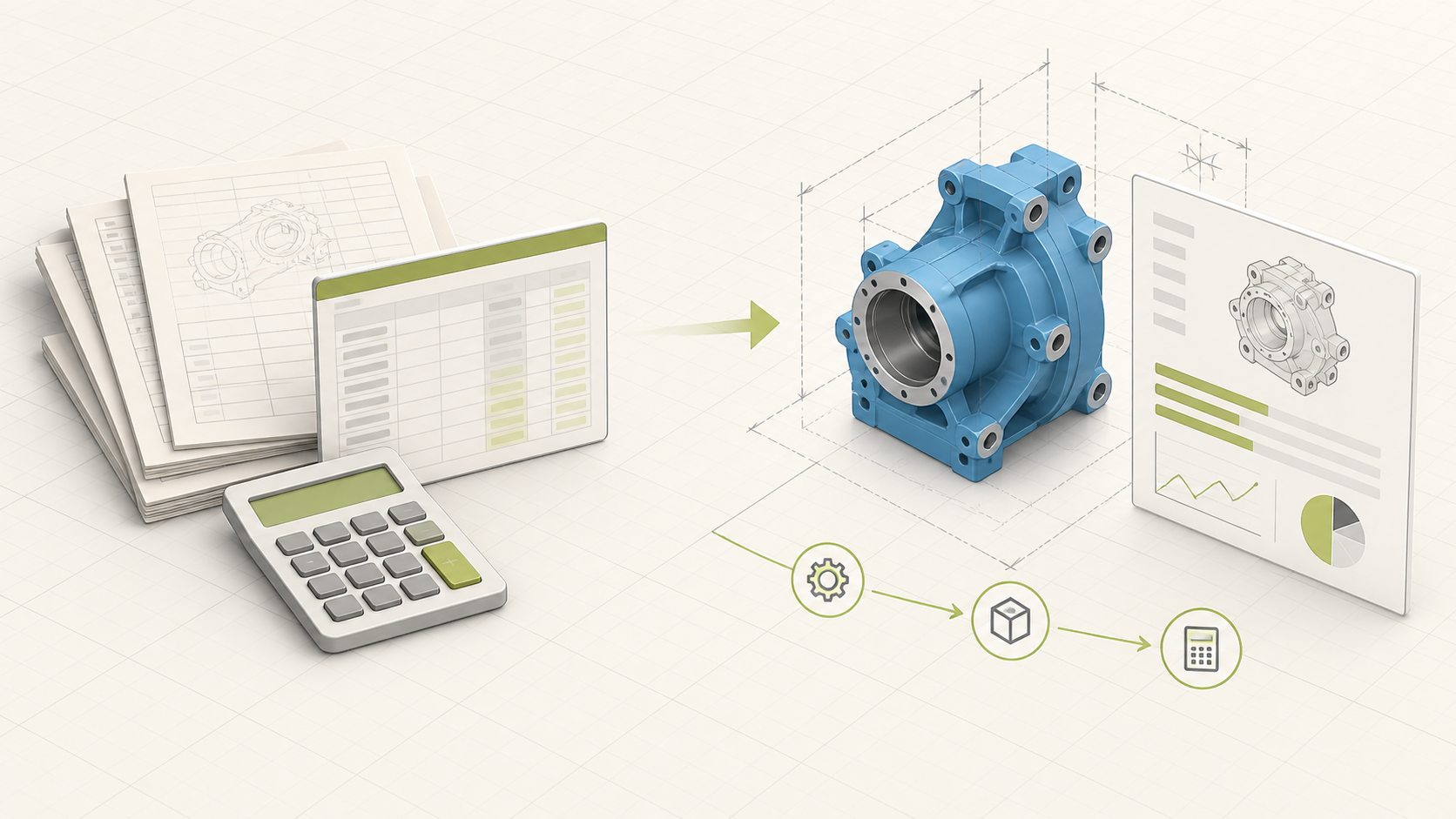
A quote often starts with one STEP file in an inbox. The estimator checks the model, copies a few values into Excel, looks up rates in another file and finally rebuilds the result in a document template. None of these steps is difficult on its own. The trouble is doing them again and again while requests arrive from different customers and channels.
- Manual quotes often mean switching between CAD, Excel, rate sheets and a document template for every request.
- That makes quick replies hard and increases the chance of inconsistent inputs or outdated assumptions.
- A faster first response matters: customers often contact several suppliers at the same time.
- Automation handles repeatable work such as geometry values and initial calculations; the estimator keeps the commercial and technical judgment.
The delay is also a sales problem. While a team is still moving numbers between files, a customer may already be comparing two other suppliers. A central calculation path helps the team answer faster and with the same assumptions, while keeping the final commercial and technical decision with the estimator.
That is the useful role of automation here: remove copying and repetition, make the first result easy to inspect, and leave room for human review when the geometry or the request does not fit the normal pattern.