operations
Edit before send: speed without operational risk
Automation drafts the quote, but the operator keeps full control before final delivery.
A quote is not just a number. It is a decision about material, quantity, cavities, finish, tolerances, tooling and what the shop is prepared to stand behind. A calculator can prepare that decision quickly, but it should not quietly make every part of it on its own.
- The calculator creates a fast, consistent draft. A person checks it before a real offer is sent.
- The review covers the inputs a file cannot reliably decide: material, quantity, cavities, finish, tolerances and tooling assumptions.
- Threads, undercuts and other manufacturing features can be missed on an initial run, especially with incomplete or unusual geometry.
- The practical advantage is both speed and control: routine offers move quickly, while exceptions go to engineering instead of becoming a hidden pricing error.
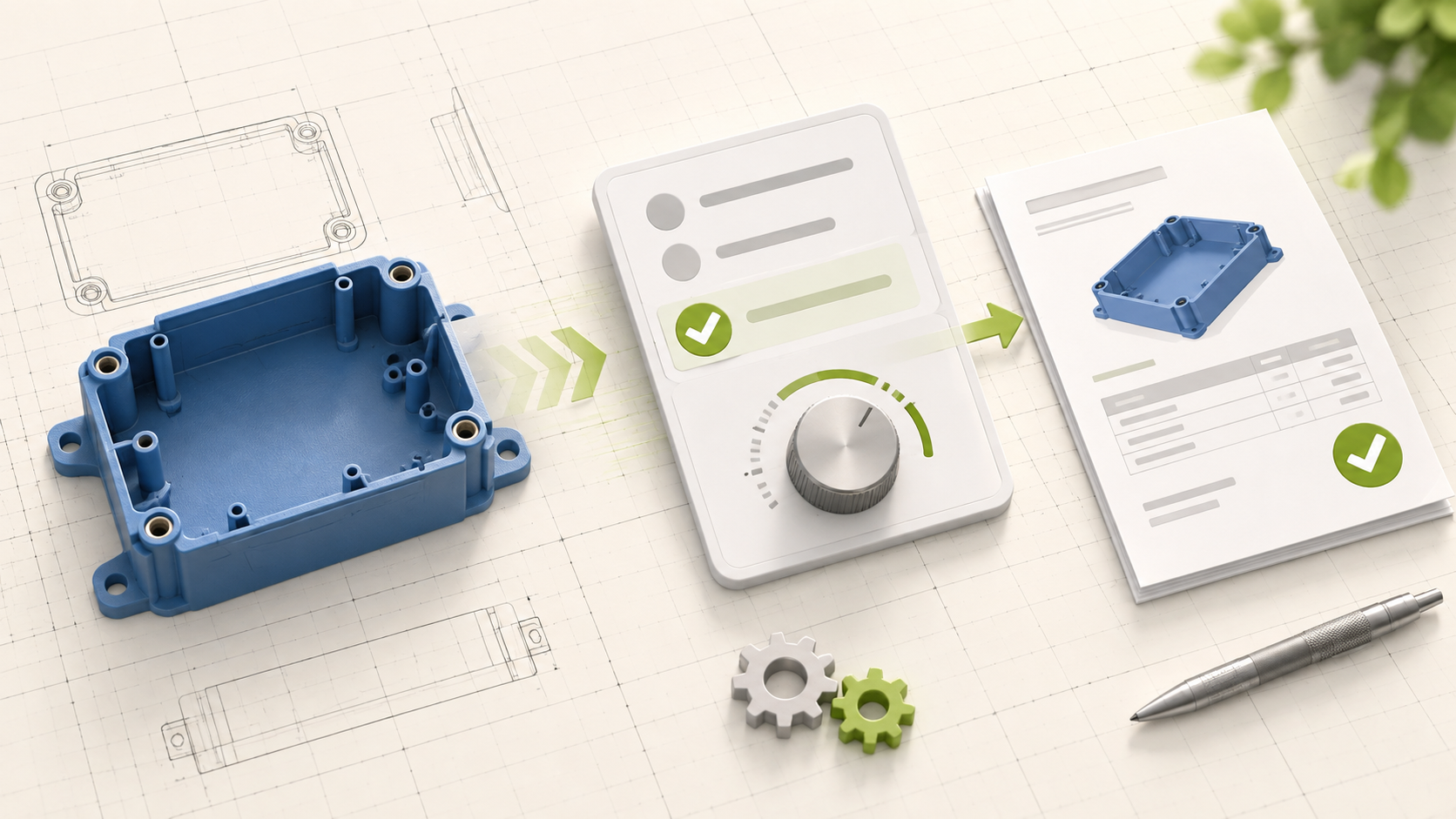
The safer workflow is draft, review and send. DemoQuoter keeps the calculated values visible, lets the operator change the assumptions or approved price lines, and sends the same approved result to the PDF and email output. That gives the team speed without hiding where judgment was used.
The review matters most when a file is unusual. Threads, undercuts, malformed geometry and drawing-only requirements can be missed on a first pass. Those cases belong in an engineering conversation, not in an invisible automatic assumption.